

Uncategorized

Guide to Selecting the Right VFD for Large Horsepower Applications

Guide to Selecting the Right VFD for Large Horsepower Applications

Variable Frequency Drives (VFDs) are at the heart of efficient, reliable operation for large industrial motors—especially those rated at 500 horsepower and above. Selecting the appropriate VFD for these demanding applications is far more complex than for standard installations, given the heightened electrical, thermal, and mechanical stresses involved. This guide offers a detailed, actionable approach to choosing the right VFD for large horsepower systems, ensuring long-term performance and operational cost savings.
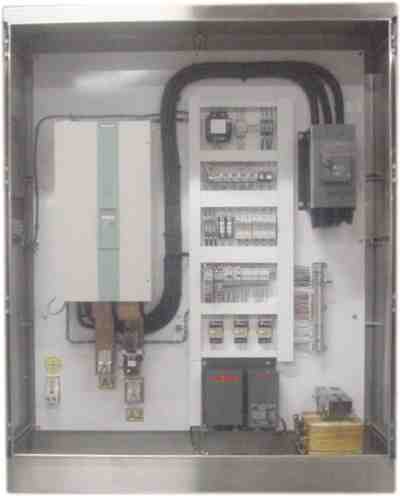
1000HP DC Traction Motor Drive, rated 600VAC input, 750VDC output built for a Slurry Pump Application.

Technical Considerations for Large Horsepower VFD Selection

1. Application and Load Analysis
Begin by clearly defining the load type—centrifugal pumps, fans, compressors, conveyors, or process equipment. Large drives often face variable loads, high starting torques, and rapid speed changes. Understanding these requirements is critical to proper sizing and feature selection.

2. Power Supply and Harmonics
Large VFDs draw significant current and can introduce harmonics into the facility’s power system. Assess your incoming power quality, voltage stability, and short circuit capacity. For sensitive environments, consider VFDs with built-in harmonic mitigation or plan for external line reactors and filters. For more on this topic, see the  […]
By |2025-11-05T14:20:07-06:00November 5th, 2025|0 Comments

Preventive Maintenance Tips to Extend the Life of Your Variable Speed Drives

Variable Speed Drives (VSDs) are critical to modern industrial operations, delivering precise motor control, energy efficiency, and process flexibility. Yet, like any advanced equipment, their long-term reliability hinges on a disciplined preventive maintenance program. Proactive care not only safeguards your investment but also minimizes costly downtime and extends the operational lifespan of your drives and connected motors.

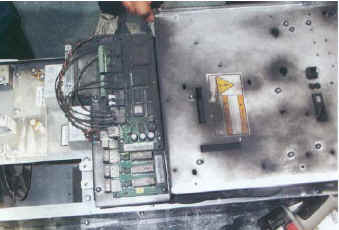
Photo 1, Fan Injecting Dust into Drive Enclosure

Fan Injecting Dust into Drive Enclosure


Technical Discussion: Essential Preventive Maintenance Actions

Establishing a robust preventive maintenance schedule is the foundation for maximizing the performance and longevity of your VSDs. Focus on these key actions:

  • Maintain a Clean Environment: Dust, debris, and moisture are among the primary threats to VSD electronics. Regularly inspect and clean enclosures, filters, and cooling fans. Ensure all ventilation paths are unobstructed.
  • Monitor Temperature and Cooling: Overheating is a leading cause of premature drive failure. Verify that ambient temperatures remain within manufacturer specifications, and promptly replace failed fans or clogged filters.
  • Check Electrical Connections: Loose terminals or corroded wiring can lead to erratic operation or damage. Tighten and inspect all power and control wiring during scheduled outages.
  • Inspect for Component Wear: Capacitors and relays degrade over time. Look for signs of bulging, leakage, […]
By |2025-10-28T15:39:56-05:00October 28th, 2025|0 Comments

The Role of VFDs in Sustainable Industrial Practices

The Role of VFDs in Sustainable Industrial Practices

Variable Frequency Drives (VFDs) are increasingly recognized as foundational technology in promoting sustainability within industrial environments. From energy-intensive manufacturing plants to distributed infrastructure systems, VFDs offer more than just precise motor speed control—they present a measurable opportunity to reduce energy usage, lower operational costs, and contribute meaningfully to environmental stewardship across industries.

Driving Energy Efficiency in Modern Industry

The integration of VFDs in the control of electric motors can yield substantial energy savings, particularly in applications involving pumps, fans, compressors, and conveyors. Instead of running motors at constant speed regardless of demand, VFDs intelligently match motor output to real-time process requirements. This direct alignment between mechanical performance and actual need reduces wasted energy, extending both motor lifespan and operational efficiency.

Multiple case studies demonstrate that retrofitting existing systems with VFDs can provide rapid payback through utility savings, while also helping facilities comply with more stringent sustainability standards. For instance, energy audits commonly reveal that 30-60% power savings are achievable in variable load processes after deploying VFD technology.

Sustainable Practices Made Achievable

Beyond direct energy savings, VFDs make several key sustainability goals attainable:

  • Reduction of Greenhouse Gas Emissions: Lower energy consumption translates to decreased carbon […]
By |2025-10-15T15:14:14-05:00October 15th, 2025|0 Comments

Best Practices for Designing Custom Control Panels for VFD Applications

Best Practices for Designing Custom Control Panels for VFD Applications

Variable Frequency Drives (VFDs) have become indispensable in modern industrial automation, enabling precise motor control, energy savings, and improved process flexibility. However, the performance and reliability of any VFD system hinge on the quality and design of its control panel. A well-engineered custom control panel not only protects sensitive electronics but also streamlines installation, commissioning, and long-term maintenance. This newsletter explores best practices for designing custom control panels tailored for VFD applications.

Custom control panel with VFDs, organized wiring, and labeled components

Photo by Cayetano Gros

Technical Discussion: Key Design Considerations

1. Environmental Protection and Enclosure Selection
Choose an enclosure with the appropriate NEMA rating for the installation environment. In dusty, wet, or corrosive locations, select a sealed, corrosion-resistant enclosure to protect VFDs and control electronics from contaminants and moisture. Ensure adequate space for airflow and cable management.
2. Thermal Management
VFDs generate significant heat during operation. Integrate cooling solutions such as fans, heat exchangers, or air conditioners based on calculated heat load. Proper thermal management prevents overheating, reduces thermal stress on components, and extends system life.
3. Power Distribution and Circuit Protection
Incorporate appropriately rated circuit breakers, fuses, and surge protection devices. Segregate high-voltage and […]

By |2025-10-08T10:53:58-05:00October 8th, 2025|0 Comments

How to Troubleshoot Common Issues with Variable Frequency Drives

Variable Frequency Drives (VFDs) are essential components in modern industrial and commercial applications, offering precise control over motor speed and enhancing energy efficiency. However, like any complex system, VFDs can encounter issues that disrupt operations. Understanding and troubleshooting these common problems can save time and resources.

Common VFD Issues and Solutions

1. Overvoltage and Undervoltage Faults

These faults occur when the voltage levels exceed or fall below the drive’s specified range. Causes can include power supply fluctuations or incorrect drive settings. To resolve, ensure the power supply is stable and check the drive’s voltage settings.

2. Overcurrent Faults

Overcurrent faults are triggered when the current exceeds the drive’s capacity, often due to sudden load changes or short circuits. Inspect the motor and connected cables for faults and verify that the drive is correctly sized for the application.

3. Ground Faults

Ground faults can indicate insulation failure in motor cables or the motor itself. To troubleshoot, disconnect the motor and test the insulation resistance. Repair or replace damaged components as necessary.

4. Overheating

Overheating can result from inadequate cooling or excessive load. Ensure the drive’s cooling system is operational and not obstructed. Consider reducing the load or upgrading the drive if persistent overheating occurs.

5. Communication […]

By |2025-10-02T10:11:59-05:00October 2nd, 2025|0 Comments

Understanding VFD Maintenance: Best Practices for Longevity and Reliability

Understanding VFD Maintenance: Best Practices for Longevity and Reliability

Variable Frequency Drives (VFDs) are at the heart of modern industrial automation, delivering precise motor control, energy savings, and improved productivity. However, to fully realize these benefits over the long term, a strategic approach to VFD maintenance is essential. Neglecting preventive care can lead to costly downtime, reduced efficiency, or even catastrophic failure. This newsletter explores the best practices for VFD maintenance, offering actionable insights to ensure your drive systems operate reliably for years to come.

Industrial control panel with VFDs and clean, organized wiring

Photo by Cayetano Gros

The Fundamentals of VFD Maintenance

Effective VFD maintenance begins with a thorough understanding of the drive’s operating environment and its critical components. VFDs are sensitive electronic devices that require protection from heat, dust, moisture, and electrical disturbances. A robust maintenance program should address:

  • Environmental Controls: Ensure enclosures are sealed, filters are clean, and ambient temperatures remain within manufacturer specifications to prevent overheating and contamination.
  • Regular Inspections: Schedule visual inspections for loose connections, damaged wiring, and signs of component wear or corrosion. Early detection is key to preventing escalation.
  • Firmware and Parameter Review: Keep firmware up to date and periodically review parameter settings to confirm they match […]
By |2025-09-25T09:04:13-05:00September 25th, 2025|0 Comments

Troubleshooting Common Issues in Large Horsepower Drive Systems

Troubleshooting Common Issues in Large Horsepower Drive Systems

As facilities scale up their operations, the complexity and demands placed on large horsepower drive systems—typically 500hp and above—pose unique challenges. Even with robust equipment and advanced engineering practices, unplanned downtime, erratic operation, or premature equipment failure can have an outsized impact on production and maintenance budgets. This newsletter highlights critical troubleshooting strategies, common pain points, and actionable solutions for maintaining reliability in large VFD and variable speed drive installations.

Understanding Large Drive System Vulnerabilities

Large horsepower drive systems serve as the backbone of material processing, pumping, manufacturing, and infrastructure automation. These systems, whether driven by AC Variable Frequency Drives or DC Variable Speed Drives, are subject to unique stressors that smaller drives may not encounter. Trouble often manifests as:

  • Unexpected tripping or alarms
  • Overheating of drives or motors
  • Excessive vibration or audible noise
  • Erratic speed or torque response
  • Component failures (fuses, IGBTs, capacitors)

The larger the drive, the more sensitive it becomes to subtle shifts in supply power quality, installation practices, and environmental changes. Recognizing the root causes allows for proactive maintenance, minimizing revenue loss from downtime.

Technical Discussion: Diagnosing and Resolving Drive System Problems

1. Power Supply Quality
Large drives are susceptible […]

By |2025-09-16T13:58:18-05:00September 16th, 2025|0 Comments

How Variable Speed Drives Enhance Productivity in Manufacturing Processes

How Variable Speed Drives Enhance Productivity in Manufacturing Processes

Manufacturing facilities are under constant pressure to improve output, maintain product quality, and reduce operational costs. One of the most effective, yet often overlooked, solutions for achieving these goals is the integration of variable speed drives (VSDs) into production processes. As energy costs rise and competition intensifies, leveraging advanced drive technology has become essential for manufacturers seeking a competitive edge.

Technical Overview: Variable Speed Drives in Manufacturing

Variable speed drives, including both Variable Frequency Drives (VFDs) for AC motors and DC Variable Speed Drives (VSDs), enable precise control of motor speed and torque. By adjusting the speed of motors to match real-time process demands, these drives optimize the performance of equipment across a wide range of manufacturing applications—such as conveyors, mixers, pumps, and fans.

At the core, a VSD works by modulating the electrical supply to a motor, allowing for seamless acceleration, deceleration, and speed adjustments. This level of control is particularly valuable in processes that require frequent speed changes or demand high precision, supporting both flexible production and consistent product quality.

Modern manufacturing line with variable speed drives integrated into conveyor systems

Photo by Pablo Stanley

Advantages of Variable Speed Drives for Productivity

By |2025-09-10T14:46:25-05:00September 10th, 2025|0 Comments
Go to Top